
HESI A2 Chemistry Review: What to Expect and How to Pass
By Maria Santos, M.Ed. · Updated March 20, 2026
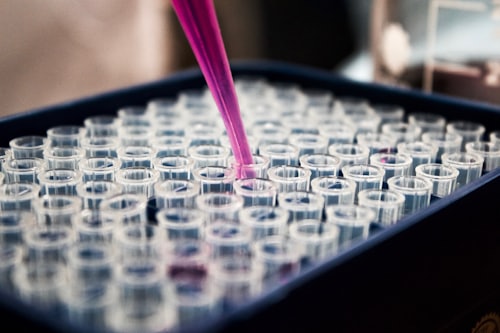
Expect questions on atomic structure, the periodic table, balancing chemical equations, and basic stoichiometry. Understanding polarity, states of matter, and acid-base pH scales is critical for passing this section.
Not every nursing school requires the HESI A2 Chemistry section — but if yours does, this guide covers exactly what's on it, how hard it really is, and the most efficient way to prepare, even if chemistry was never your strongest subject.
Is the HESI A2 Chemistry Section Hard?
The HESI A2 Chemistry section tests foundational, introductory-level chemistry — not advanced or organic chemistry. Most test-takers describe it as a "know it or you don't" section. If you took high school chemistry or a college general chemistry course, much of this will be review.
Many HESI test-takers panic over the Chemistry section because they assume it will be full of complex stoichiometry math. In my experience reviewing HESI results, the vast majority of the chemistry section tests conceptual foundations: predicting bond types (ionic vs. covalent), understanding the properties of water, and basic periodic table trends (electronegativity). Don't get lost in complex math; focus on the behavior of atoms.
The section typically has 25 questions with a 25-minute time limit, giving you about one minute per question. Most are straightforward recall questions, not multi-step calculations.
What Topics Are Covered?
1. Atomic Structure
You must understand the parts of an atom: protons (positive, in nucleus), neutrons (neutral, in nucleus), and electrons (negative, in electron shells). Know how to determine each from the periodic table using atomic number and mass number.
2. The Periodic Table
Understand how the table is organized: periods (rows) and groups (columns). Know the trends — electronegativity increases left to right, atomic radius increases top to bottom. Be able to identify metals, nonmetals, and metalloids.
3. Chemical Bonds
- Ionic bonds: Transfer of electrons between a metal and nonmetal (e.g., NaCl)
- Covalent bonds: Sharing of electrons between nonmetals (e.g., H₂O)
- Hydrogen bonds: Weak bonds between molecules (important in water and DNA) — for a deeper review of DNA structure and function, see our HESI A2 biology review
4. Chemical Reactions
Know the basic reaction types: synthesis (A + B → AB), decomposition (AB → A + B), single replacement, and double replacement. You should be able to balance simple chemical equations using the Law of Conservation of Mass. If your program also requires the Math section, our HESI A2 math formulas guide covers the essential equations you'll need.
5. Solutions and Concentrations
Understand solute (substance being dissolved), solvent (substance doing the dissolving), and solution (the mixture). Know what affects solubility: temperature, pressure, and the nature of the solute/solvent.
6. Acids, Bases, and pH
The pH scale runs from 0 (most acidic) to 14 (most basic), with 7 being neutral. Acids donate hydrogen ions (H⁺); bases accept them. Remember the scale is logarithmic — each whole number represents a tenfold difference. Understanding pH balance is also essential for the HESI A2 Anatomy & Physiology section, where it connects to blood gas regulation.
7. States of Matter
Know the properties of solids, liquids, gases, and plasma. Understand phase transitions: melting, freezing, evaporation, condensation, sublimation, and deposition.
How to Study for HESI Chemistry Efficiently
- Don't over-study. This is introductory chemistry. If you find yourself studying reaction kinetics or stoichiometry calculations, you've gone too deep.
- Use flashcards for periodic table trends, bond types, and pH values of common substances.
- Practice with timed quizzes to get comfortable with the 1-minute-per-question pace.
- Watch YouTube videos on topics you're weakest in — visual explanations help chemistry concepts stick.