
How to Pass TEAS 7 Math (Even if You're Bad at Math)
By Dr. Priya Sharma, Pharm.D. · Updated March 31, 2026
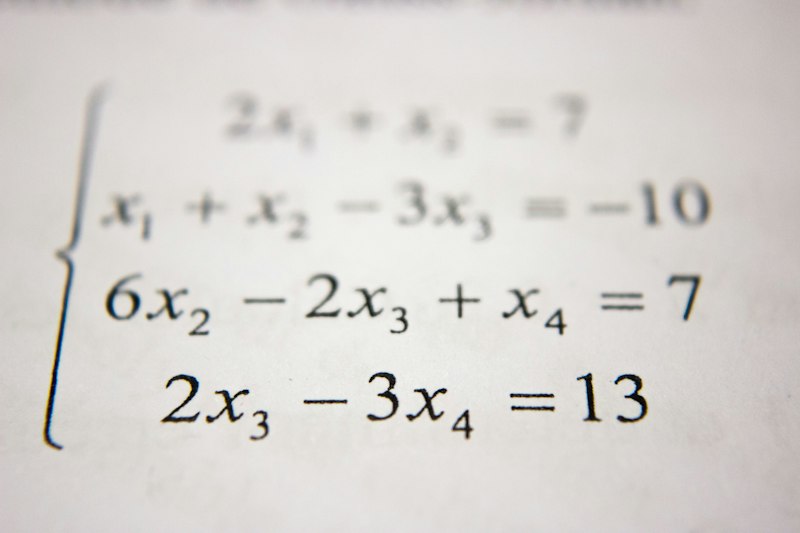
Focus your time on mastering basic algebra, solving for X, and complex word problems. Because a drop-down calculator is provided, your success depends on formula setup and reading comprehension, not mental arithmetic.
Does the thought of a math test make your heart race? You're not alone. Thousands of aspiring nursing students face severe math anxiety when approaching the ATI TEAS 7.
If you consider yourself "bad at math," the TEAS 7 math section can feel like a massive, insurmountable barrier between you and your dream of attending nursing school. Many students avoid studying for it because looking at fractions and algebra triggers feelings of frustration and inadequacy.
But here is the truth: TEAS 7 Math isn't about being a "math genius" or solving complex calculus equations. It's about recognizing patterns, understanding a few foundational rules, and practicing a very specific set of high-yield question types. You don't need to learn all of mathematics—you just need to learn the TEAS.
In this guide, we'll break down exactly what you need to focus on to pass the TEAS 7 math section, even if you haven't taken a math class in a decade.
The Format of the TEAS 7 Math Section
First, let's demystify what you are actually facing. The TEAS 7 Math section consists of 38 questions, and you are given 57 minutes to complete them. That gives you exactly 1.5 minutes per question.
The questions are broken down into two main categories:
- Numbers and Algebra (23 questions)
- Measurement and Data (9 questions)
- Plus 4 unscored pretest questions mixed in randomly.
The good news? You get to use a built-in, drop-down four-function calculator. You don't have to do long division by hand! However, you must know what to plug into the calculator to get the right answer.
The 4 Highest-Yield Topics to Master
If you're struggling or short on time, don't try to study everything. Focus heavily on these four pillars. Mastering them will cover the vast majority of points you need to pass.
1. Fractions, Decimals, and Percentages
The TEAS absolutely loves testing your ability to convert between fractions, decimals, and percentages, or asking you to order them from least to greatest. You must be comfortable moving seamlessly between these three formats.
Simple Strategy: A fraction is just a division problem. If you see 3/4, simply type 3 ÷ 4 into your calculator to get 0.75. To turn that decimal into a percentage, move the decimal point two spaces to the right to get 75%.
Understand the phrase "percent of." If a question asks, "What is 15% of 80?", turn the percent into a decimal (0.15) and multiply it by 80. (0.15 x 80 = 12).
2. Basic Algebra (Solving for X)
You will face equations with one variable. The golden rule of algebra is simple: Whatever you do to one side of the equals sign, you must do to the other side. Your goal is to get the letter (usually "x") completely by itself.
Simple Example: Solve for x: 3x + 10 = 25
First, subtract 10 from both sides to isolate the term with x: 3x = 15. Then, divide both sides by 3: x = 5. Practice this step-by-step isolation until it becomes muscle memory.
3. Geometry (Area, Perimeter, and Volume)
The TEAS will not provide formulas. You must memorize the basic formulas for rectangles, triangles, and circles. Focus on Area and Perimeter (or Circumference for circles).
- Rectangle: Area = length × width. Perimeter = adding all four sides.
- Triangle: Area = ½ × base × height.
- Circle: Area = πr². Circumference = 2πr (use 3.14 for π).
Simple Example: Find the area of a circle with a radius of 4 cm.
A = π × (4)²
A = 3.14 × 16 = 50.24 cm²
4. Word Problems & Proportions
Word problems cause the most panic, but they are often the easiest to solve if you know how to set up a proportion. Ratios and proportions allow you to compare two ratios.
Simple Example: A medication requires 2 mg for every 10 lbs of body weight. How many mg should a 150 lb patient receive? (This type of question is a dosage calculation — a high-frequency TEAS topic.)
Set up the proportion: 2 mg / 10 lbs = x mg / 150 lbs. Cross-multiply: 10x = 300. Divide by 10. x = 30 mg.
Overcoming the Psychological Barrier
Half the battle with math is psychological. When you tell yourself "I am bad at math," your brain shuts down the moment you see a complicated problem. You must reframe this: "I may not know how to solve this yet, but I can learn the steps."
Start small. Do just 10 math problems a day. Consistency builds competence, and competence builds confidence. Don't skip steps, and always write your work down on scratch paper, even if it feels tedious. Trying to hold numbers in your head leads to careless errors.
Finally, understand that you don't need a 100% to get into nursing school. Most programs look for a TEAS math score in the 70s or 80s. You have the buffer to get a few questions wrong. Keep moving, skip questions that paralyze you, and return to them if you have time.
Don't Do It Alone
If you've tried watching free videos and reading textbooks but the numbers still look like a foreign language, it's time to stop suffering in silence. Math is incredibly difficult to self-teach if you lack foundational skills. Sometimes, you just need a human being to explain it to you in three different ways until it finally "clicks."
I once worked with Sarah, who suffered from severe math anxiety and was trying to memorize every obscure geometry formula. I told her to abandon geometry and drill strictly on fractions, decimals, and ratios—which make up over 60% of the TEAS math section. Once she internalized 'Keep-Change-Flip' for fractions and basic cross-multiplication, she leaped from a 55% to an 82%. You don't need calculus; you need bulletproof arithmetic foundations. For more topic-specific guides and practice drills, visit our TEAS 7 Math resource hub.
Self-Study Portal — Pass the TEAS 7 in 14 Days
28 structured lessons, 100+ flashcards with spaced repetition, full practice test, mistake tracking, predicted score, and 16 study tools — with one-time passes from $29 (no subscription).
Try Free Preview →Frequently Asked Questions
📚 TEAS 7 Study Resources
Find TEAS Prep Near You
Don't let math keep you out of nursing school.
At Tutoriffic, our certified specialists have helped hundreds of self-proclaimed "math haters" pass the TEAS 7 with flying colors. We pinpoint exactly where your foundational gaps are and build you an accelerated, custom study plan.
Learn About TEAS Prep Take the Free Diagnostic